

Stamped concrete typically lasts 25 years or more when properly installed and maintained. The concrete slab itself can last the life of the building. The stamped surface — its color, pattern definition, and protective coating — needs resealing every 3–5 years to stay protected from UV fading, water infiltration, and surface wear. With consistent sealer maintenance, a stamped concrete patio or driveway can look excellent for decades.
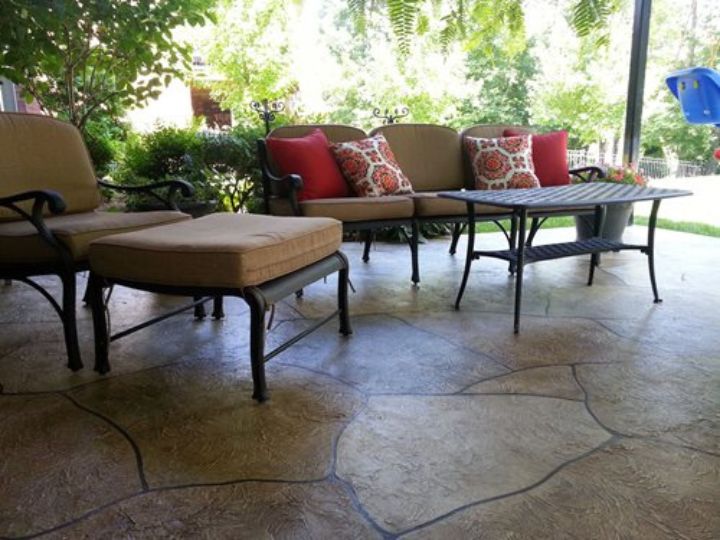
Understanding Stamped Concrete Lifespan: What “Lasts” Means
There are three layers to a stamped concrete surface, and they have different lifespans:
- The concrete slab: Structurally, a properly installed slab lasts 30–50+ years. It’s the foundation, and barring structural failure from soil movement, tree roots, or base deterioration, it doesn’t wear out.
- The stamped overlay or pattern: If the stamping was done on a fresh pour or a quality overlay, the pattern itself is mechanically durable — it doesn’t wear away with normal use. The definition of the pattern holds for decades.
- The color and sealer: This is the layer that requires ongoing maintenance. UV exposure, foot and vehicle traffic, and weather gradually break down the sealer and cause color to fade. Resealing every 3–5 years refreshes the protection and restores color vibrancy.
What Shortens Stamped Concrete Lifespan
Skipping sealer maintenance
Sealer neglect is the single most common reason stamped concrete looks worn before its time. An unsealed surface allows water to penetrate the color layer, UV to bleach the pigment, and freeze-thaw cycles to expand moisture in the pores — causing pitting, scaling, and color loss. A resealing schedule costs a fraction of resurfacing or replacement and extends the usable life significantly.
Deicing chemicals
Rock salt and calcium chloride — common during Austin’s occasional freeze events — are highly damaging to stamped concrete surfaces. They increase the absorption of water into the slab and accelerate surface scaling. In Austin, where hard freezes are infrequent but can be severe, this is relevant: avoid deicers on stamped concrete and use sand for traction instead.
Poor initial installation
Stamped concrete that was poured too wet, improperly cured, or installed on an inadequately prepared base will develop structural problems regardless of maintenance. Sealing can’t fix a problem that starts with the slab. This is one reason Sundek of Austin’s 40-year track record matters — we’ve seen what poor installation looks like and what proper installation produces.
How Austin’s Climate Affects Stamped Concrete Lifespan
Austin is harder on outdoor concrete than most U.S. markets, for three overlapping reasons:
- UV intensity: Austin’s sun is intense year-round. UV is the primary degrader of sealer and color on stamped concrete. UV-stable sealers are non-negotiable for Austin projects — standard sealers chalk and fail within 2–3 years here.
- Expansive clay soils: Much of the Austin metro — particularly North Austin, Round Rock, Cedar Park, and Georgetown — sits on expansive black clay that swells with rain and contracts during drought. This movement is the leading cause of cracking in stamped concrete slabs. Proper joint placement and crack repair at installation reduce this significantly.
- Occasional hard freezes: Austin averages few freeze days, but events like the 2021 winter storm exposed the risk of severe freeze damage on outdoor concrete. Properly sealed slabs handle freeze events far better than unsealed ones — the sealer limits water penetration before freezing temperatures arrive.
Signs Your Stamped Concrete Needs Resealing vs. Resurfacing
- Color looks faded or blotchy but the surface is intact → Resealing is all that’s needed.
- Sealer is peeling, flaking, or chalky → Strip the old sealer and re-apply fresh sealer.
- Fine hairline cracks are appearing at joints → Normal; repair with joint filler before resealing.
- Deep cracks, spalling, or surface pitting → Concrete repair or overlay resurfacing before resealing.
- Pattern definition is still crisp but color is gone → Resealing + color can be applied without replacing the overlay.
Sundek of Austin has been maintaining and resurfacing stamped concrete across Austin since 1986. Whether your stamped concrete needs a routine reseal or a full resurfacing, we evaluate the actual condition and recommend the right scope — not the most expensive one. Request a free estimate →
See stamped concrete options for Austin, TX →