

Free on-site estimate and slab assessment
Polished Concrete Floors Austin, TX
Polished concrete is a mechanically refined floor finish that grinds, hones, and burnishes an existing concrete slab to a smooth, low-maintenance surface with a controlled level of sheen — from a flat matte to a mirror-like high gloss. No coatings, no wax, no topical sealers to reapply. The finish is the concrete itself, refined through multiple passes of increasingly fine diamond tooling until it reaches the desired look.
Sundek of Austin has been installing decorative concrete floors throughout the Austin metro since 1986. Explore our concrete floors Austin solutions for residential and commercial properties. We offer true mechanically polished concrete for commercial and residential projects, as well as high-gloss overlay systems that deliver the polished concrete look on surfaces where mechanical grinding isn’t practical. Both paths produce a floor that’s durable, easy to maintain, and appropriate for Central Texas living and business environments.
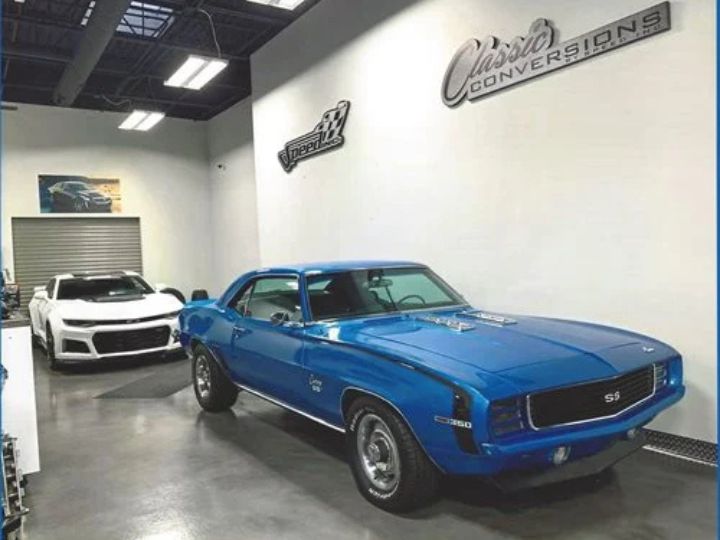
Polished concrete has become one of the fastest-growing floor options in Austin — in restaurants, retail stores, modern homes, office spaces, and warehouses — because it performs exceptionally well in high-traffic, high-heat environments and fits the clean, industrial-modern aesthetic that’s become common across Austin’s growing commercial and residential landscape
Polished Concrete Finish Levels — What to Expect
Not all polished concrete looks the same. The final appearance depends on how deep the grind goes (which determines what's revealed in the slab) and what sheen level is achieved through the honing and burnishing process. Here's a breakdown:
| Finish Level |
Look |
Best For |
Cost Range (sqft) |
|
Cream/Flat |
Matte, uniform gray |
Warehouses, utility spaces |
$3–$5 |
|
Salt & Pepper |
Fine aggregate visible, low sheen |
Modern offices, retail, modern homes |
$5–$8 |
|
Medium Aggregate |
Pebbles visible, medium gloss |
Commercial, open-concept interiors |
$7–$12 |
|
High Gloss / Mirro |
Reflective, stone-like surface |
Showrooms, restaurants, premium retail |
$10–$18+ |
|
|
|
|
|
|
|
Most Austin commercial clients choose the salt & pepper or medium aggregate finish — they’re visually interesting, durable at scale, and maintain slip-resistance at appropriate grit levels. Residential clients who want that sleek showroom look typically go for the medium-to-high aggregate range with a semi-gloss or high-gloss sheen.
All levels can incorporate integral color, dye, or decorative scoring to add pattern and visual depth.
Where Polished Concrete Works Best in Austin
Commercial and Office Spaces
Polished concrete is the dominant floor choice in Austin’s commercial sector for a reason — it handles foot traffic that would wear through most other surfaces, requires minimal maintenance, and looks better over time as it develops a natural sheen from use. We install it in office buildings, co-working spaces, hotels, medical facilities, schools, and churches throughout the Austin metro. For large commercial projects, polished concrete is also LEED-eligible, since it refines the existing slab without adding new materials.
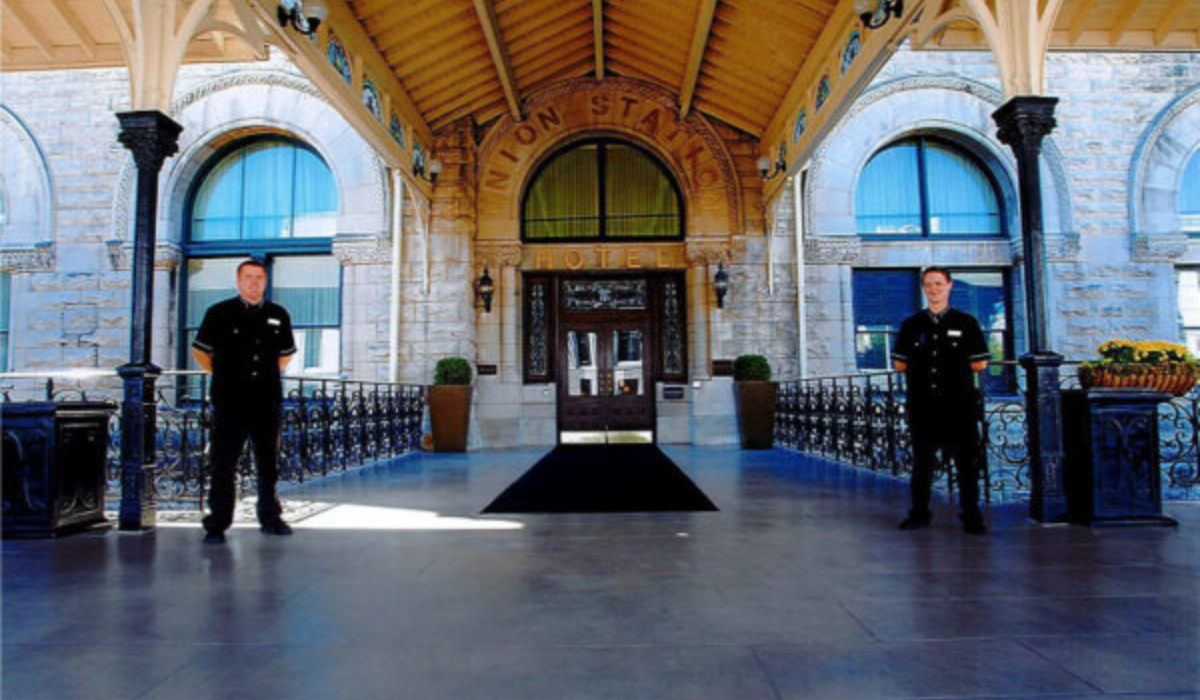
Restaurants and Retail
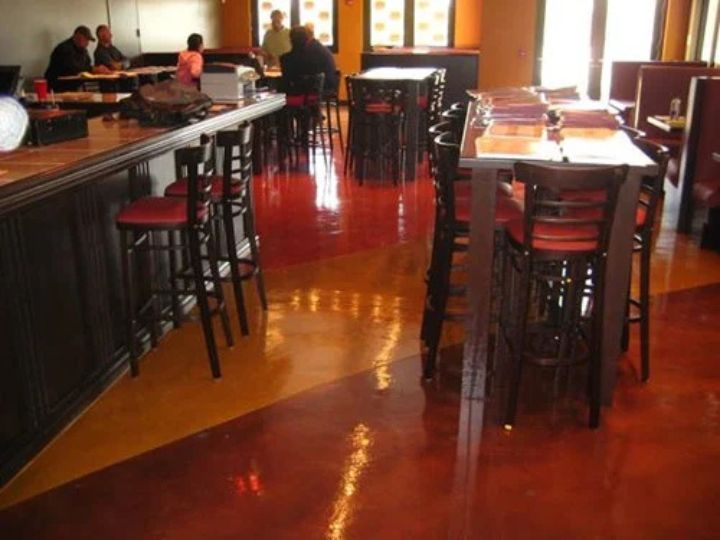
The restaurant and retail environment in Austin — from downtown food halls to Mueller District shops to South Congress boutiques — has fully embraced polished concrete. It’s easy to clean, resists spills and staining at the slab level (when properly densified), tolerates heavy point-load traffic from commercial kitchen equipment, and photographs well for the social-media-heavy restaurant industry. Polished concrete in a commercial kitchen or bar area holds up to conditions that would destroy an epoxy coating in months.
Residential Interiors
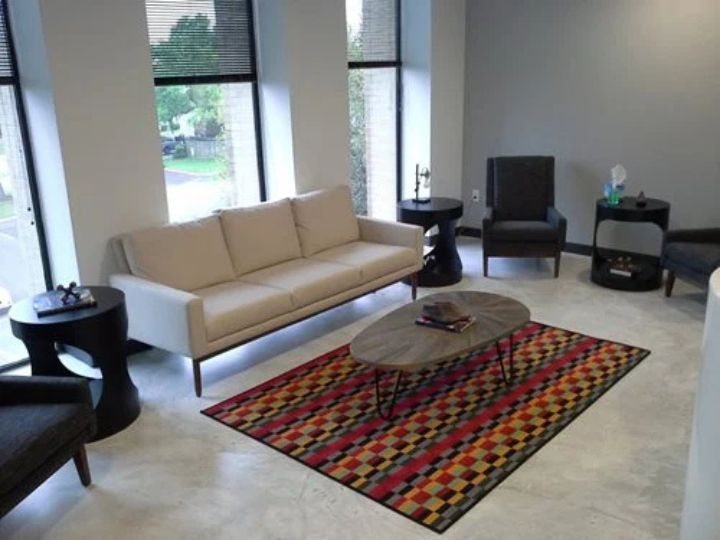
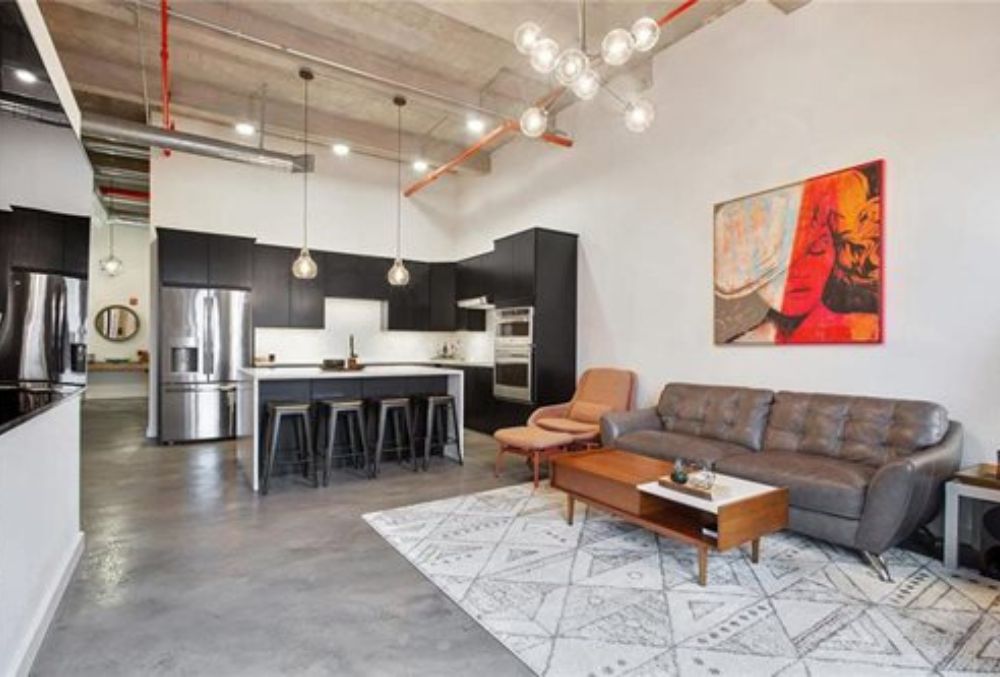
Polished concrete has moved from commercial spaces into Austin homes, particularly in modern, industrial, and Hill Country contemporary builds where an open, minimal aesthetic is the goal. It works across kitchens, living areas, master bedrooms, and open-plan spaces. It’s comfortable underfoot at Austin’s typical indoor temperatures, compatible with radiant heating systems, and far easier to keep clean than tile or hardwood in Central Texas’s dusty conditions.
For residential projects, we also offer the polished look through our overlay systems for spaces where the existing slab isn’t a good candidate for mechanical grinding.
Warehouses and Industrial Spaces
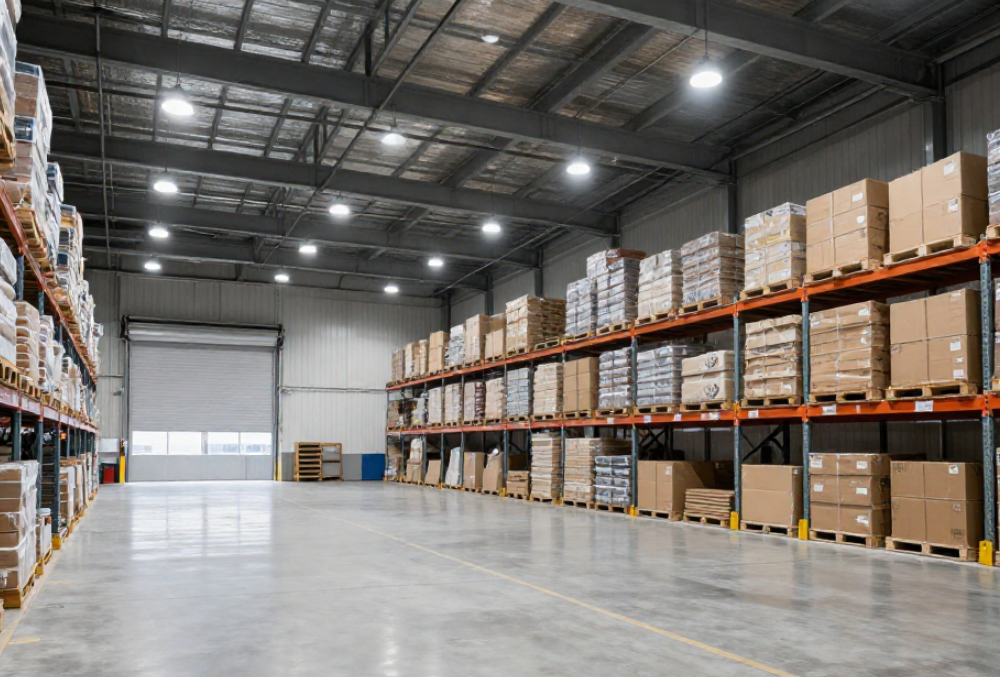
Warehouses, distribution centers, manufacturing facilities, and garage spaces across the Austin area benefit from the durability and low-maintenance profile of polished concrete. A densified, polished warehouse floor is resistant to forklift and pallet jack wear, reduces concrete dust (a significant operational benefit in manufacturing and food production), and can be maintained with a standard auto-scrubber. No stripping, no waxing, no specialized chemical reapplication.
Garage Floors
For residential and commercial garage floors, polished concrete offers an alternative to epoxy coatings — one that won’t peel, hot-tire mark, or need periodic recoating. We offer both mechanically polished garage floors and our high-performance garage floor coating systems depending on the project requirements and the condition of the slab.
Polished Concrete Cost in Austin, TX
Polished concrete pricing in Austin varies based on the finish level, the size of the project, the condition of the existing slab, and whether any repairs or leveling are needed before grinding begins. General starting ranges:
- Cream / flat matte: Starting from $3/sqft — minimal grind, no aggregate exposure
- Salt & pepper (low-medium sheen): Starting from $5/sqft — light aggregate exposed
- Medium aggregate / semi-gloss: Starting from $7/sqft — pebbles visible, richer look
- High gloss / mirror finish: Starting from $10/sqft — premium showroom finish
- Overlay / polished look (new surface): Starting from $6/sqft — for slabs not suited to mechanical grinding
Pricing for large commercial projects (5,000+ sqft) is typically more competitive per square foot due to setup efficiency. For smaller residential areas under 500 sqft, setup and mobilization costs have more influence on the per-sqft price.
Compared to tile, hardwood, or luxury vinyl plank installed in a similar space, polished concrete delivers a lower total cost over a 10-year period when maintenance savings are factored in — no grout cleaning, no refinishing, no replacement of worn sections. We provide a free, itemized estimate after seeing the actual space.

Our Polished Concrete Process
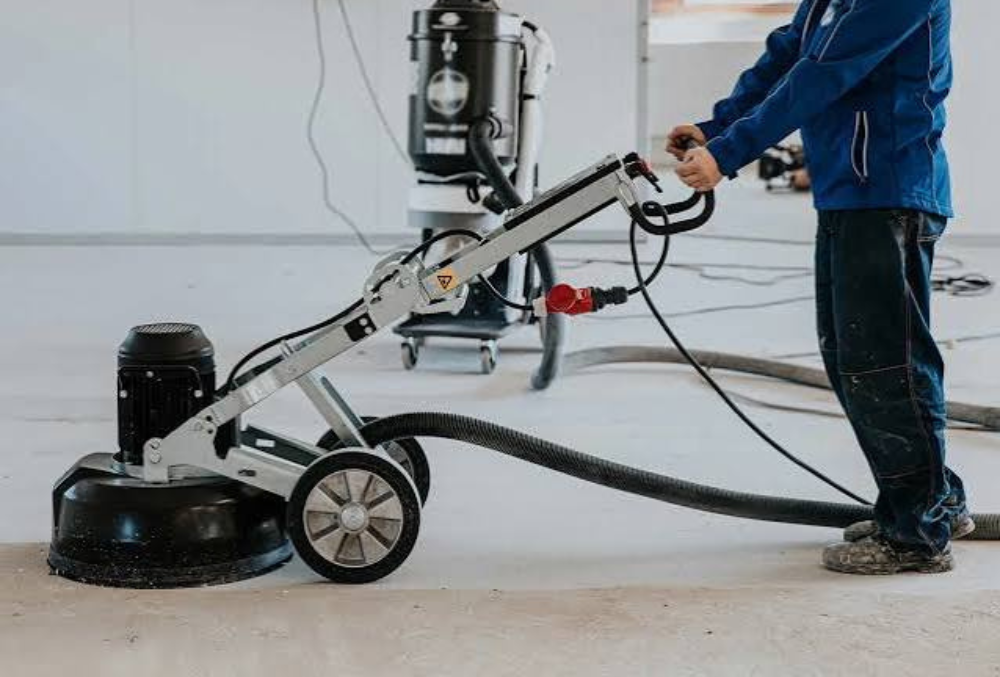
Polished concrete is a multi-stage mechanical process. Each step builds on the last — there are no shortcuts that produce a lasting result.
We evaluate the existing concrete — its age, composition, hardness, any previous coatings, and current condition. This determines the appropriate grinding approach and whether any repairs are needed first.
Cracks, spalling, pits, and joint damage are addressed before grinding begins. Repair material is selected to match the hardness and aggregate size of the surrounding slab so it grinds consistently.
We remove any existing coatings, level high spots, and open the surface of the concrete using coarse diamond tooling. This stage sets the aggregate exposure level — how much pebble and fine aggregate becomes visible in the finished floor.
Progressively finer diamond tooling removes the scratches from the previous step and begins developing the flatness and uniformity of the surface.
A chemical densifier (sodium, potassium, or lithium silicate) is applied and allowed to penetrate the slab. It reacts with the calcium hydroxide in the concrete to form calcium silicate hydrate — hardening the surface and dramatically reducing concrete dust and porosity.
Resin-bond diamond tooling is used in progressively finer grits to develop the sheen level — from matte/honed to semi-polished to high-gloss. The number of passes and final grit level determines the finished sheen.
Color can be added at this stage via water-based dye or stain for projects that want a tinted polished floor rather than the natural concrete color.
A penetrating guard product is applied to fill residual surface porosity and protect against oil and staining. This is different from a topical sealer — it goes into the slab rather than forming a surface film that can peel.
A penetrating guard product is applied to fill residual surface porosity and protect against oil and staining. This is different from a topical sealer — it goes into the slab rather than forming a surface film that can peel.
Polished Concrete FAQ
What is polished concrete?
Polished concrete is a floor finishing process that uses diamond-bonded abrasive tooling to mechanically grind, hone, and burnish an existing concrete slab to a smooth, dense surface with a controlled level of sheen. The process doesn’t add a coating — it refines the surface of the slab itself. A chemical densifier hardens the concrete during the process; a penetrating guard protects it afterward.
How long does polished concrete last?
A properly polished and maintained concrete floor can last the life of the building. There’s no coating to wear through, peel, or reapply. The floor may need periodic re-burnishing (typically every 1–3 years depending on traffic) and guard reapplication every few years, but the polished concrete surface itself doesn’t have a fixed lifespan. It’s the most long-lasting floor option available.
Is polished concrete slippery?
This is the most common misconception about polished concrete. At the correct finish level, polished concrete meets or exceeds the DCOF (Dynamic Coefficient of Friction) requirements for commercial floor surfaces. A cream or salt & pepper finish is not slippery under dry conditions; even a high-gloss finish typically passes slip testing. Wet surfaces require normal precautions (entrance mats, floor signage) as with any smooth floor surface. We can also add anti-slip aggregate to the guard product for spaces that need additional wet traction.
Can you polish any concrete slab?
Most concrete slabs are candidates for polishing. Variables that affect the process include slab hardness (very soft concrete takes longer to develop sheen), aggregate type and size (determines what’s visible at various grind depths), existing coatings (must be removed before grinding), and previous damage. We assess all of this during the free estimate. For slabs where mechanical grinding isn’t practical — severe damage, radiant heating tubes too close to surface, or very thin overlays — we offer a polished-look overlay system instead.
How is polished concrete different from stained concrete?
These are often confused. Polished concrete is about the finish process — grinding and honing the slab to a smooth, dense, shiny surface. Staining is about color — applying acid stain, water-based stain, or dye to the surface to add color. They’re not mutually exclusive: many polished concrete floors incorporate color via dye or stain applied mid-process. The key distinction is that polished concrete produces a specific smooth, reflective finish, while staining or dyeing alone doesn’t change the surface texture.
Learn more about stained concrete →How much does polished concrete cost in Austin, TX?
Austin polished concrete pricing starts around $3–$5/sqft for a basic cream or flat finish on a large commercial project, and ranges up to $10–$18+/sqft for a high-gloss showroom finish on a residential or premium commercial space. Project size, slab condition, finish level, and whether color work is included all affect the final price. We provide a free, itemized estimate after an on-site assessment — no guesswork on our end and no surprises on yours.
How long does polished concrete installation take?
Most residential projects (500–2,000 sqft) take 2–4 days. Large commercial projects are quoted with a specific timeline based on square footage and logistics. The floor is accessible within a few hours of the final burnish — there’s no curing time as with coatings or epoxy systems.
Do you serve my area in Austin or the surrounding metro?
We serve the full Austin metro and surrounding Central Texas communities. See the service area table below, or contact us to confirm your address.
Polished Concrete Near You — Austin Metro Service Area
Sundek of Austin installs polished concrete floors for residential and commercial clients throughout the Austin metro. Our crew handles projects from small residential spaces to large commercial floors across Central Texas.
- Austin (all zip codes)
- Round Rock, TX
- Cedar Park, TX
- Georgetown, TX
- Kyle, TX
- Pflugerville, TX
- Buda, TX
- San Marcos, TX
- Dripping Springs, TX
- Lakeway, TX
- Bee Cave, TX
- Westlake Hills, TX
- Rollingwood, TX
- Bastrop, TX
- Bastrop, TX
Call 512-928-8000 or request a free estimate online — we’ll schedule an on-site evaluation and walk you through your finish options. Most estimates are available within 3–5 business days.